🎬 The Exorcist (1973)
Part of The Exorcist
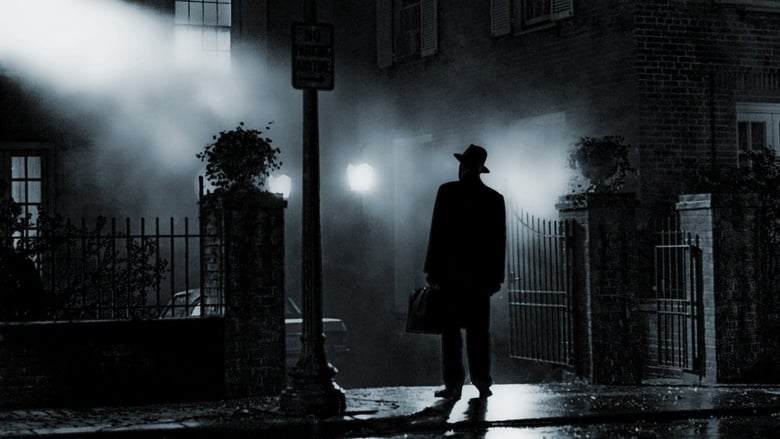
William Friedkin’s 1973 adaptation of William Peter Blatty’s novel is a rare case where the author himself shaped the screenplay, resulting in a film that is remarkably faithful to its source material while amplifying its visceral horror through cinematic craft. Blatty streamlined his theological and psychological subplots, sharpening the focus on the dual crisis of faith experienced by Father Damien Karras and the physical degradation of young Regan MacNeil. The Georgetown setting remains a character in itself, with the infamous “Exorcist steps” becoming an enduring cinematic landmark. Friedkin’s documentary-like approach, using naturalistic lighting and overlapping dialogue, grounded the supernatural elements in a gritty realism that made the demonic possession feel disturbingly plausible.
The casting process was famously contentious, with Warner Bros. pushing for established stars while Blatty and Friedkin insisted on relative unknowns like Jason Miller and Linda Blair. This gamble paid off, lending an unvarnished authenticity that a major star might have disrupted. The production itself became legendary for its chaos—sets burned down, actors suffered injuries, and the shoot stretched to over 200 days, fueling rumors of a cursed set. Friedkin’s relentless methods, including firing guns on set to elicit genuine startle responses and chilling the bedroom to subzero temperatures for visible breath, pushed the cast to extremes that translated directly onto the screen.
Upon release, the film ignited a cultural firestorm. Audiences queued around city blocks in winter weather, and reports of fainting, vomiting, and hysterical outbursts in theaters became a marketing phenomenon in their own right. Critics were initially divided, with some dismissing it as exploitative schlock while others recognized its serious engagement with faith and doubt. The cerebral angiography scene, a starkly clinical sequence of a needle entering Regan’s neck, proved as disturbing to many viewers as the supernatural set pieces, blurring the line between medical horror and demonic invasion.
The film’s legacy extends far beyond its initial shock value. It became the first horror film nominated for Best Picture, and Blatty’s screenplay won an Academy Award, cementing the adaptation’s prestige. While the novel remains a landmark of literary horror, Friedkin’s version redefined what the genre could achieve visually and emotionally, establishing a template for possession narratives that countless films have since imitated but rarely equaled. Its power lies not just in the iconic imagery—the rotating head, the projectile vomit—but in its unflinching portrayal of a mother’s desperation and a priest’s crisis of belief, elements drawn directly from Blatty’s page and rendered with devastating immediacy.

The Exorcist is a 1971 horror novel by American writer William Peter Blatty. The book details the demonic possession of eleven-year-old Regan MacNeil, the daughter of a famous actress, and the two priests who attempt to exorcise the demon. Inspired by a 1949 case of demonic possession and exorcism that Blatty heard about while he was a student at Georgetown University, the novel became a literary phenomenon upon its release, spending over a year on the New York Times bestseller list. Blatty's work explores profound themes of faith, doubt, and the nature of evil, blending visceral horror with theological inquiry. The novel's success spawned a major film adaptation and numerous sequels, cementing its place as a cornerstone of modern horror literature.
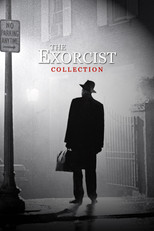
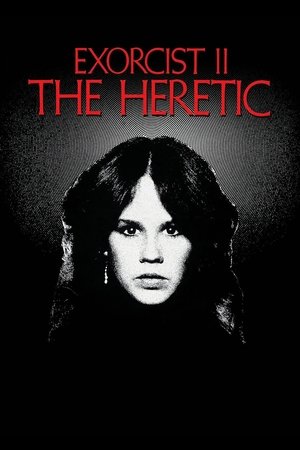
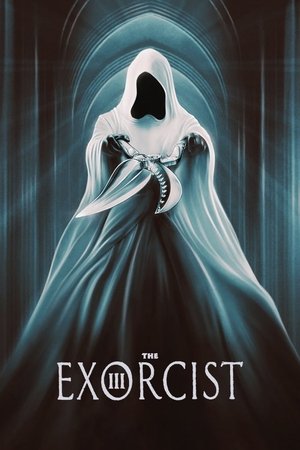
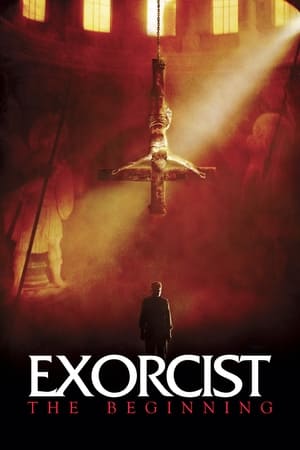
The Exorcist collection stands as one of horror cinema's most enduring and psychologically complex explorations of faith, evil, and the supernatural. Originating from William Peter Blatty's 1971 novel—itself inspired by a reported case of demonic possession in the 1940s—the series transformed a single story of a possessed child into a multi-generational meditation on spiritual warfare. The 1973 film adaptation, directed by William Friedkin, shattered box office records and earned ten Academy Award nominations, including a historic Best Adapted Screenplay win, proving that horror could achieve both critical acclaim and mainstream cultural impact. Its unflinching depiction of innocence corrupted by an ancient demonic force, Pazuzu, grounded the supernatural in a starkly realistic world of medical skepticism and clerical doubt, making the impossible feel terrifyingly real. This foundation established a thematic template that subsequent entries would revisit, challenge, and expand upon over the following decades.\n\nThe collection's evolution has been marked by bold creative swings and notorious production struggles, reflecting the difficulty of following a landmark original. Exorcist II: The Heretic took a surreal, metaphysical approach that polarized audiences, while The Exorcist III, written and directed by Blatty himself, returned to the psychological dread and theological weight of the first film, earning critical reappraisal over time. The early 2000s saw an unprecedented situation where two competing prequels—Exorcist: The Beginning and Dominion: Prequel to the Exorcist—were produced back-to-back, each offering a radically different vision of Father Merrin's first encounter with Pazuzu. This unusual chapter in the collection's history underscores the property's persistent, almost obsessive hold on filmmakers and audiences alike.\n\nAcross its entries, The Exorcist collection consistently probes the fragility of belief and the intimate nature of evil. Rather than relying solely on shock, the films often frame possession as a crisis of faith, where the battle for a soul is both physical and existential. The demonic presence is not merely a monster but a mocking, intelligent force that exploits human weakness and despair. This thematic depth allows the collection to function as more than a series of horror films; it is a sustained inquiry into the limits of science, the necessity of hope, and the terrifying possibility that darkness is not an external threat but something that can take root within the most vulnerable. The recent legacy sequel, The Exorcist: Believer, attempts to reintroduce these questions to a new generation, demonstrating that the image of a child transformed by an ancient, mocking evil remains a potent and deeply unsettling mirror for contemporary anxieties.\n\nCulturally, the collection has left an indelible mark on the horror genre and beyond. The original film's imagery—the levitation, the head rotation, the projectile vomit—has become iconic shorthand for supernatural terror, endlessly referenced and parodied. Yet the collection's true legacy lies in its willingness to treat spiritual dread with seriousness, paving the way for later horror works that blend visceral scares with philosophical weight. Despite the varying reception of its sequels and prequels, the series endures because its central conflict refuses to age: the fear of losing control, of innocence defiled, and of a universe where malevolent forces are both eternal and deeply personal. The Exorcist collection remains a cinematic chronicle of spiritual crisis, a long, dark hallway echoing with questions about what we believe when confronted with the unthinkable.